

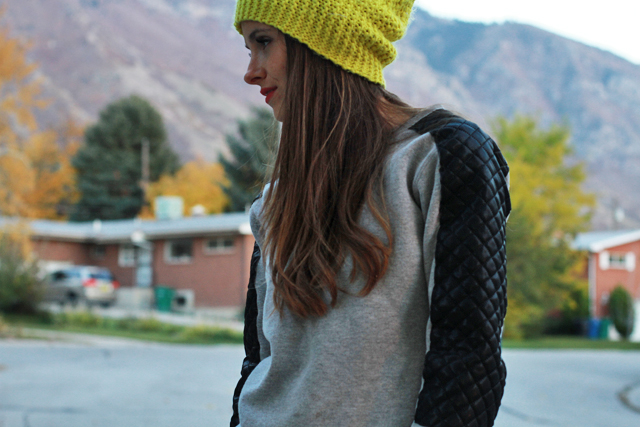
 Fall is arguably one of the best seasons to upgrade your cold weather wardrobe. Quilted leather has been on the rise, with drool-worthy crewnecks from the likes of coveted designer label, Balmain. A luxe leather alternative to more traditional approaches, this on-trend look has major street style cred and offers a unisex appeal. Believe it or not, you can get inspiration from high fashion and translate it easily into your own wardrobe.
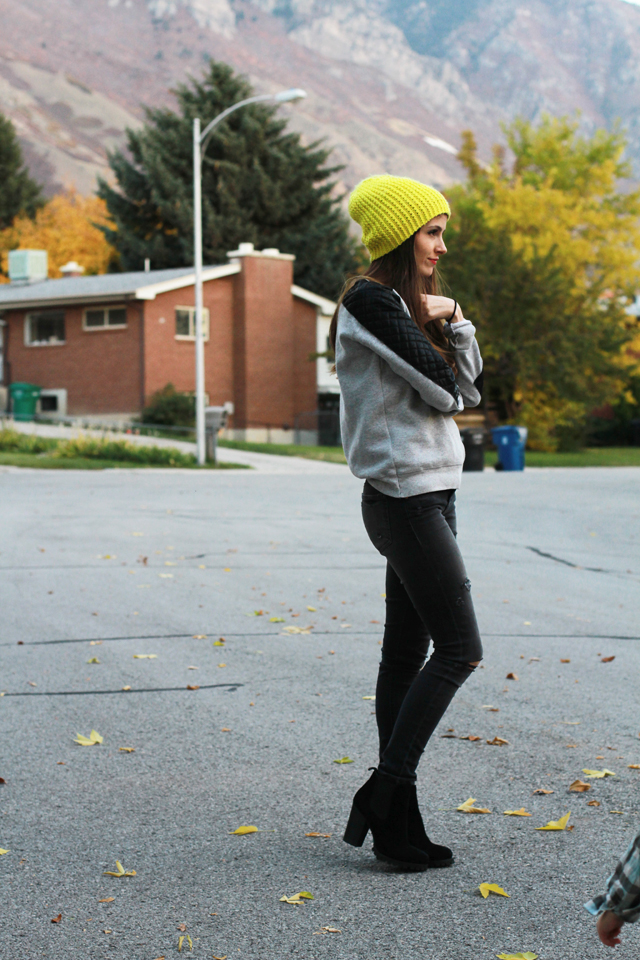
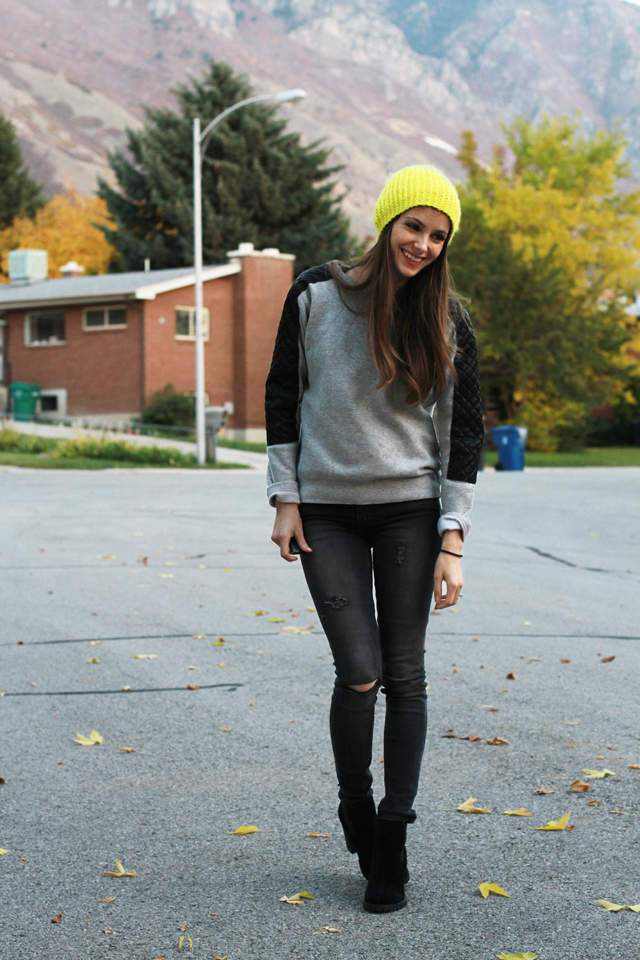
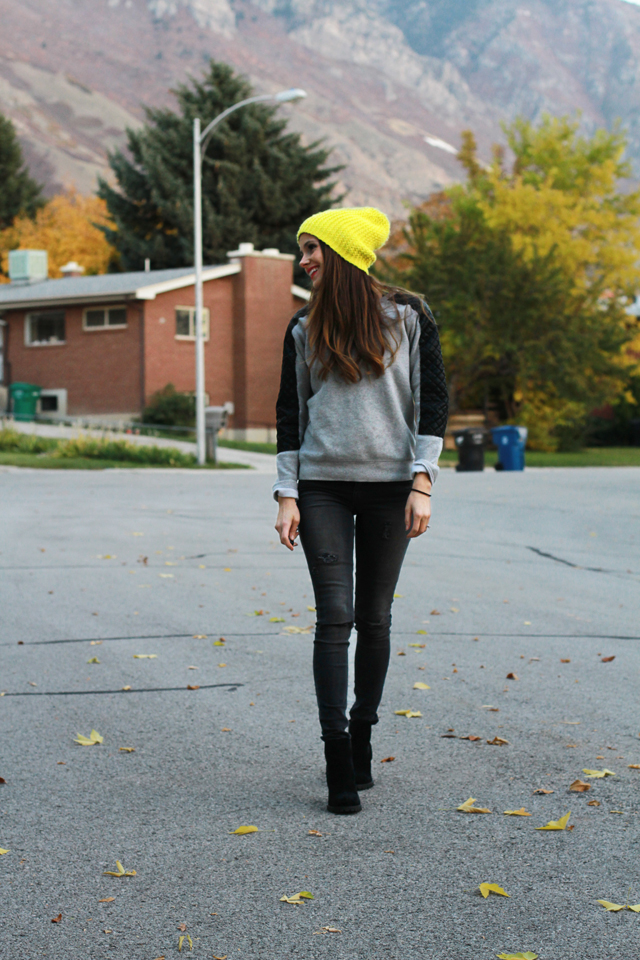
Take a simple sweatshirt and elevate it to a whole new level with this fun DIY tutorial from Liz Bryson at Cotton and Curls. For supplies, Liz used several pins, a pair of scissors, black thread and her sewing machine.
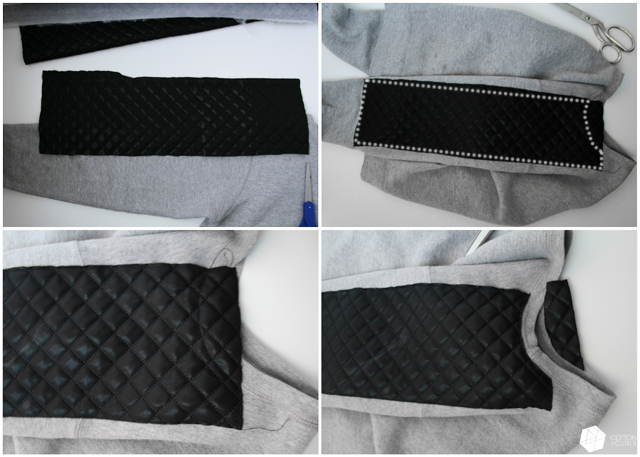
- She first started by cutting out two pieces for the arms.
- Next, she pinned these cut outs to the sleeves. Matching your thread to your fabric creates a neat, coordinated end result.
- After that, she began to sew the quilted leather pieces onto the sleeves.
- As for any residual fabric, she simply cut off any extra to keep things looking clean and fresh.
Although Liz used a sweatshirt with this easy tutorial, the possibilities are literally endless! Try adding a few patches of quilted leather to a pair of gray sweatpants for a look that matches from head to toe. Or, add a few strips of quilted leather panels to a jacket for an added sense of cool.
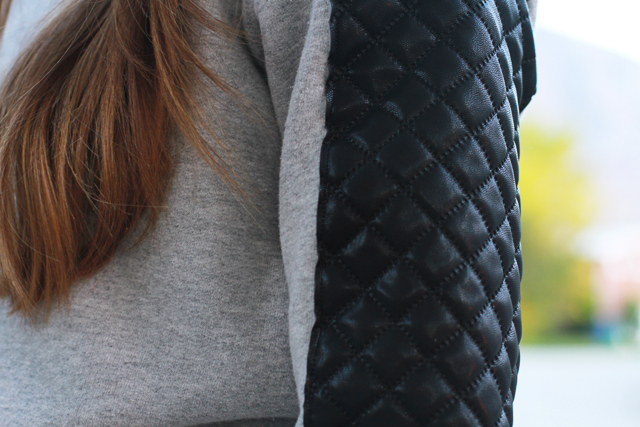
Edgy and chic, this quilted leather sweatshirt looks fresh off the runway. People will be shocked at how simple this DIY tutorial is. Check out our options of quilted leather fabric we have for sale here at MJTrends. Rock this quilted leather sweatshirt now, an effortless wardrobe staple that’ll see you through the new season.


Matching Products:
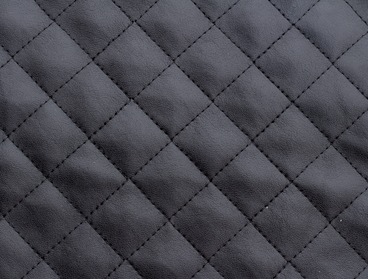
Quilted faux leather fabric
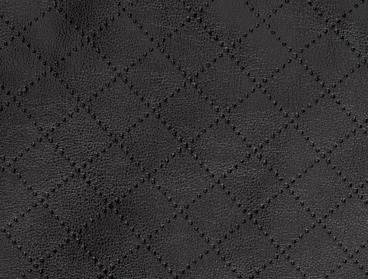
Laser quilted faux leather


Cutting two separate pieces for the arms before pinning them onto the sleeves seems like a smart way to control placement and symmetry on a sweatshirt.
The emphasis on keeping things clean and fresh by removing leftover fabric is a good reminder not to rush the finishing stage.
This really does look like something straight off a runway, especially considering how simple the steps are from cutting to sewing and trimming.
It’s helpful that Liz keeps the process linear—cut, pin, sew, trim—so it doesn’t feel like there are hidden complicated steps.
I could see experimenting with different panel shapes instead of just standard sleeve inserts to create something more unique.
I like how Liz kept the supply list simple with just pins, scissors, thread, and a sewing machine, which makes the project feel approachable even for someone newer to sewing leather.
The step of pinning before sewing seems especially important with leather since it can shift easily compared to regular fabric.
I appreciate that Liz trims the excess fabric after sewing since bulky edges can ruin the clean look of quilted leather if you’re not careful.
Using a basic sweatshirt as the base keeps the project affordable while still achieving that luxe, high-fashion vibe mentioned at the start.
It’s interesting how this takes inspiration from Balmain’s quilted leather crewnecks but breaks it down into a DIY that doesn’t feel intimidating at all.
This makes quilted leather feel less intimidating overall, especially when you see it applied in small sections rather than an entire garment.
I didn’t realize quilted leather could have such a unisex appeal until seeing it applied to something as basic as a sweatshirt.
The mention of black thread specifically makes sense since it blends well and keeps the focus on the quilted texture rather than the stitching.
I like that the tutorial focuses on sleeves because it adds interest without overwhelming the entire garment with leather.
The tip about matching your thread color to the fabric really stood out because it’s such a small detail that makes the finished quilted sleeves look much more polished.
The idea of extending this technique to gray sweatpants for a full matching set is actually pretty cool and feels very current street style.
Adding quilted leather panels to a jacket instead of just sleeves opens up a lot of customization options depending on how bold you want the look.