


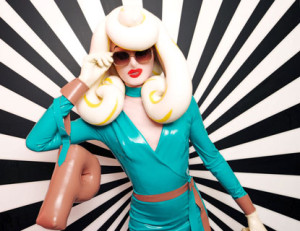
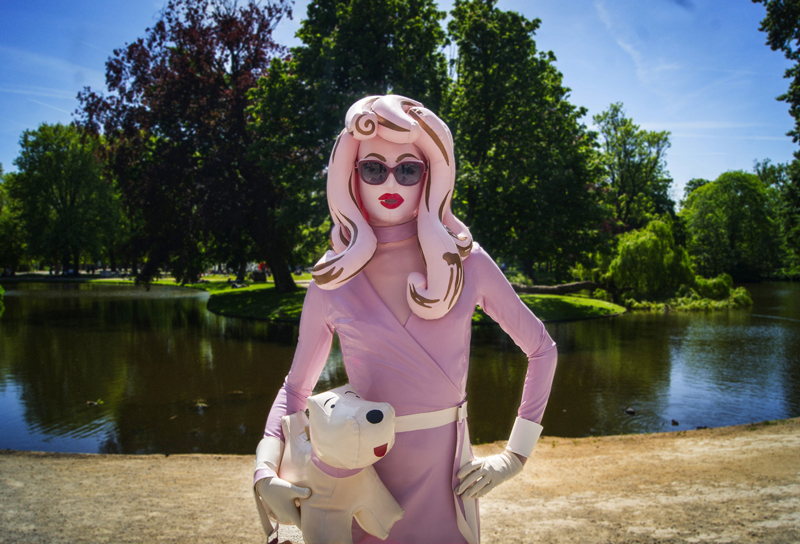
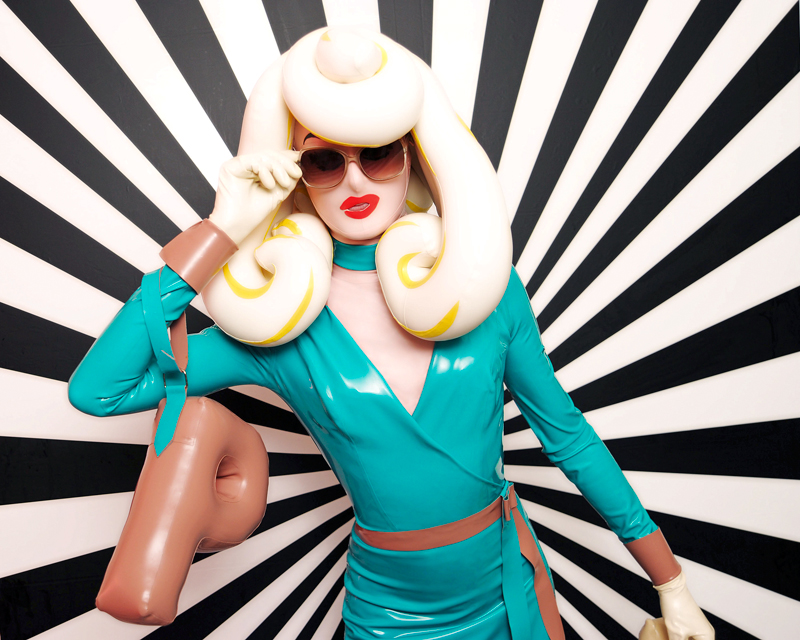
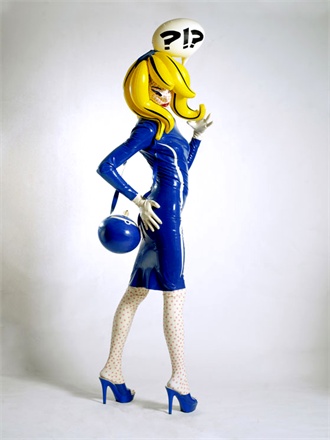
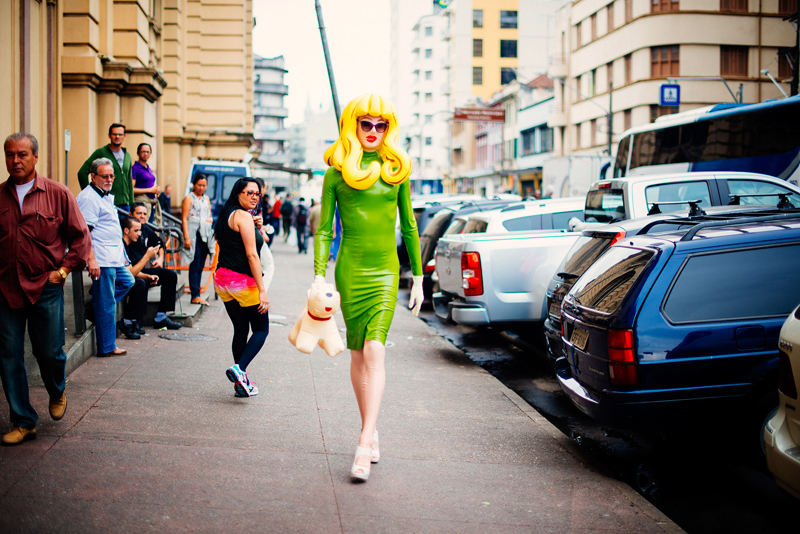
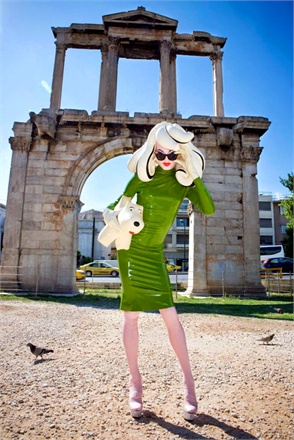
 Wearing latex from head-to-toe and towering over everyone at 7ft tall, Pandemonia is hardly ever one to blend in with the crowd. Known for head-turning looks, the artist looks like she just stepped out of a pop art painting from the likes of Roy Lichtenstein. Fans of the artist will appreciate the amount of time and detail spent on creating latex dresses in pops of color like green, teal and pink. Created by an anonymous fine artist based out of London, Pandemonia has a signature look, featuring her bouncy blonde hair and puppy at her side. The artist has been featured in TAINT Magazine, The Huffington Post and Vogue Italia, among other publications.
The conceptual artist first debuted at gallery openings around 2009, but recently appeared throughout London Fashion Week. A highlight look was her bold red latex dress, completed with layers of fringe on the arms, so perfect for dancing. She felt the need to create Pandemonia as a reflection about ideas of celebrity, femininity and mass media.
Interested in the exploration of pop myth and reality, Pandemonia crosses the barriers amongst sculpture, digital media, photography and performance art. The artist told Stylist that it takes months to create each work, with one hair sculpture entailing 74 intricately constructed panels. The artist currently has an exhibition, The Marketability of Desire, on display at Hyde Park in London, with cryptic titles like “Futile”, “Vain” and “Hopeless”. One thing is for certain, Pandemonia has certainly captured the imagination of both the art and fashion world.






Matching Products:
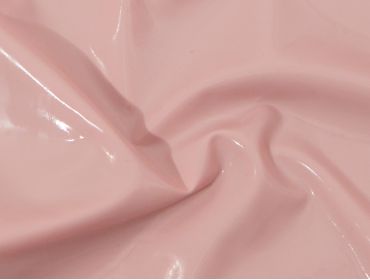
Baby pink latex sheeting.
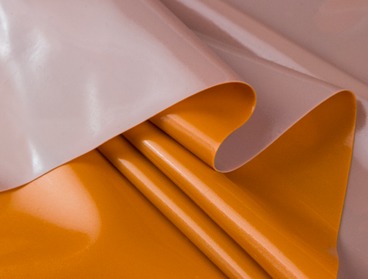
Double sided metallic orange latex
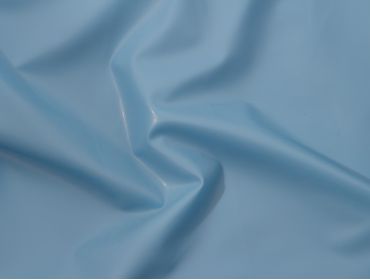
Sky blue latex sheeting


It’s interesting how Pandemonia operates somewhere between character and artwork, especially with the anonymity of the creator. You’re never quite sure where the persona ends.
Her towering height combined with latex from head to toe must create such a striking presence in person. It’s almost like she’s intentionally overwhelming the viewer.
The article makes it clear that Pandemonia isn’t just about shock value; there’s a consistent conceptual thread about celebrity and media running through everything she does.
The puppy detail is oddly grounding in an otherwise surreal presentation. It humanizes the towering 7ft latex figure just enough to make the whole persona more approachable.
What stood out to me was the anonymity of the artist behind Pandemonia. It adds another layer to the exploration of identity and media, especially since the character is so visually loud.
I found the months-long creation process fascinating, especially knowing each piece is so meticulously constructed. It adds weight to what might otherwise be dismissed as just a costume.
I like how Pandemonia blends performance art with fashion week appearances, especially that red fringe dress meant for dancing. It’s theatrical but still grounded in commentary about celebrity culture.
The detail about the 74-panel hair sculpture really stuck with me; it makes the whole persona feel more like engineering than costume. Months of work for each piece explains why the look feels so polished.
I appreciate how the work crosses into photography and digital media, not just physical sculpture. It makes sense given the commentary on how images circulate in modern culture.
That red fringe dress sounds like a standout piece, especially with movement in mind. It’s interesting how even something so sculptural is designed to interact with performance and motion.
The use of cryptic titles like “Vain” and “Futile” suggests there’s a more introspective or critical edge beneath the glossy surface. That contrast makes the project more compelling.
The bouncy blonde hair feels like a deliberate exaggeration of classic beauty standards, especially paired with the synthetic latex textures. It’s both familiar and unsettling.
The idea of using latex in such vibrant colors like green and pink gives the work a glossy, almost commercial feel, which ties nicely into the themes of mass media and marketability.
I didn’t realize she started at gallery openings back in 2009; it’s cool to see how that evolved into appearances at London Fashion Week. That trajectory really shows how fluid art and fashion have become.
Seeing her described as a living pop art figure makes sense, especially with those bold teal and pink latex dresses. It feels like stepping into a Lichtenstein panel that’s come to life.
The connection to pop myth and reality really comes through in the description. She feels like a commentary on how celebrities become exaggerated, almost cartoonish versions of themselves.
I like that the article highlights both the craftsmanship and the conceptual side, because it would be easy to focus only on the spectacle. The balance makes the work feel more substantial.
The contrast between the playful pop-art colors and the darker exhibition titles like “Hopeless” is interesting. It makes the whole project feel less whimsical and more critical than it first appears.
The mention of features in Vogue Italia and Huffington Post shows how well the concept translates across different audiences, from art circles to mainstream fashion media.
Her exhibition title, The Marketability of Desire, feels very on the nose but effective. It connects directly with the character’s exaggerated femininity and polished, almost plastic aesthetic.